Mumbai Police
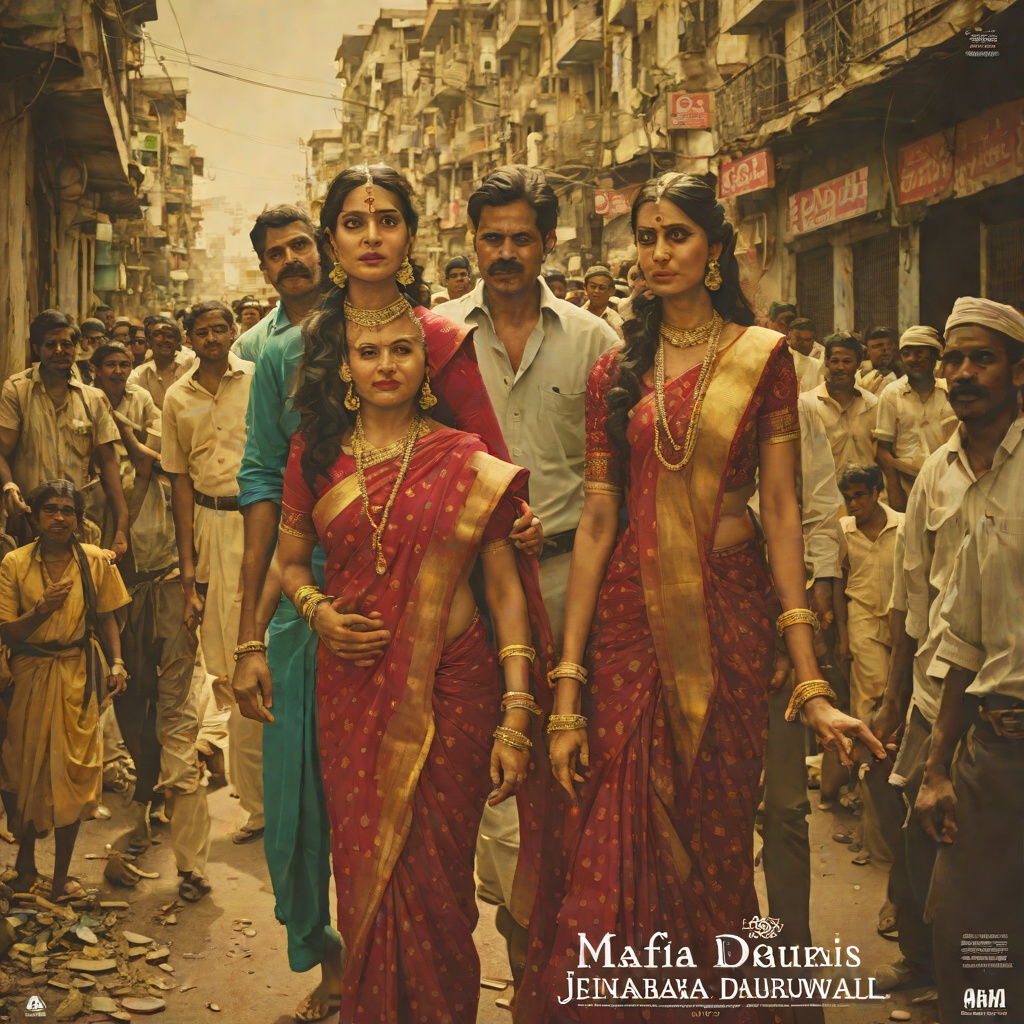
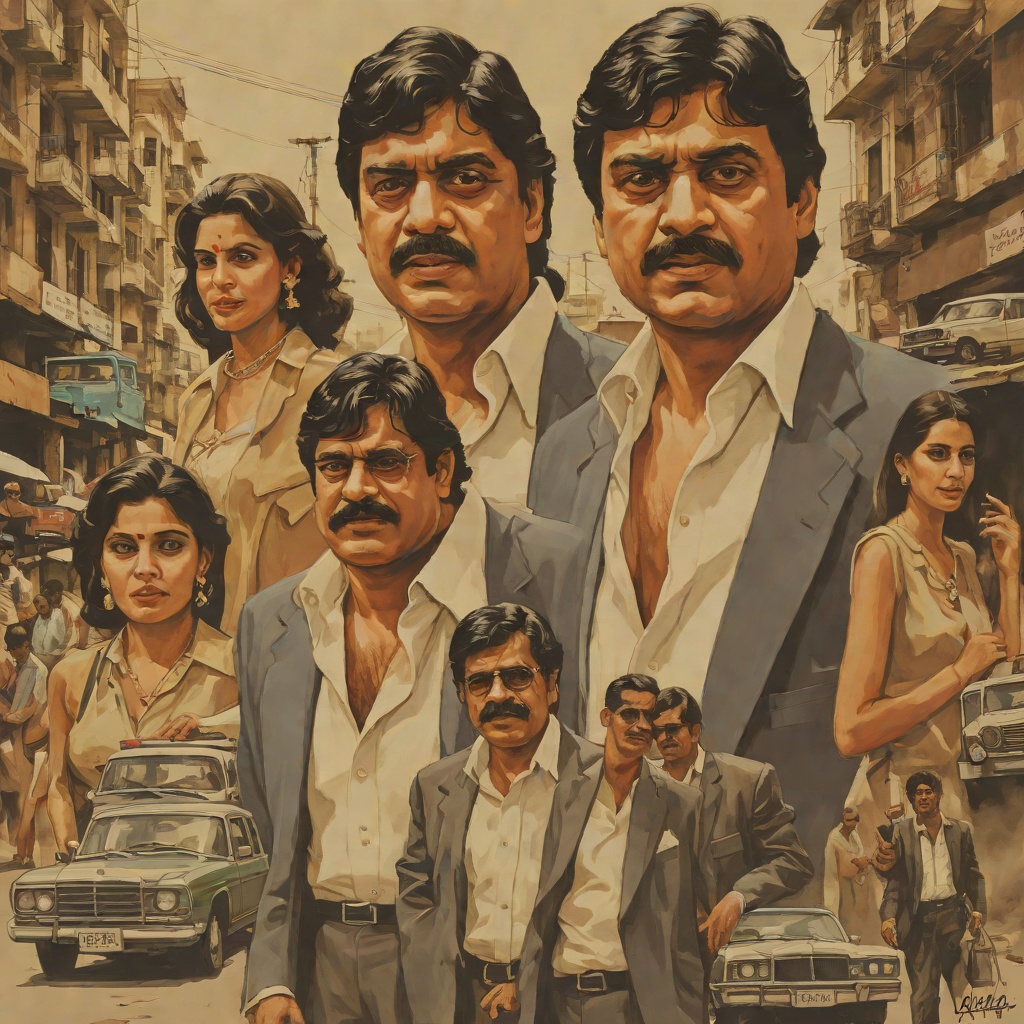
Mafia Queens of MumbaiThe Mumbai Police looms over this chronicle of the city's underworld as the indispensable counterweight to the women criminals it pursues, shelters, and sometimes kills. It is the institution that defines their criminality through the laws it enforces, the arrests it makes, and the extrajudicial violence it commits. The force appears in multiple guises: the colonial-era prohibition enforcers who created the bootlegging economy, the Crime Branch officers who cultivated informants like Jenabai Daaruwali, the Anti-Narcotics Cell that repeatedly arrested Mahalaxmi Papamani, and the encounter specialists who gunned down Mehmood Khan at Santa Cruz airport. In each of these roles, the police are not a neutral arbiter of justice but an active, often brutal participant in the world they claim to control, their actions shaping the fates of the women whose stories the book tells.
Colonial Legacies and the Prohibition Regime
The Mumbai Police's modern character is rooted in the colonial administration that shaped the city itself. Marine Lines, the area that gives its name to the police jurisdiction, is a British legacy, a throwback to the mid-nineteenth century when the British put Mumbai on the trade route by linking the city with a network of railheads; the name derives from Marine Battalion Lines, a British military establishment later converted to air force residence quarters. The police force inherited this colonial geography, patrolling a city whose very layout bore the marks of imperial planning. The prohibition regime that created the city's first great female bootlegger was itself a colonial-era policy. On 1 August 1939, two years after the first Congress ministry was created in the Bombay province, prohibition was introduced in the city, and law-enforcers faced problems in the very first week of implementation, with clashes between groups for and against the ban. The home minister at the time, Barrister K.M. Munshi, carried out an intensive recruitment programme in the police force to implement the Prohibition Act effectively, creating an exclusive cadre called the X Division headed by a DCP, Prohibition, and training new sub-inspectors for special prohibition duty while bringing men from the Excise Department into the city police department. When the Second World War broke out in 1939, however, the mammoth prohibition force was diverted for security measures to the docks, and the implementation of prohibition suffered. This colonial inheritance set the pattern for a police force that would alternately enforce and neglect the law according to political expediency, a pattern that would define its relationship with the women criminals of the underworld.
The Crime Branch and the Informant Economy
The Mumbai Police's relationship with the underworld was never simply adversarial; it was built on a complex economy of information and protection. Jenabai Daaruwali, the bootlegger who rose to power under the prohibition regime, maintained cordial relations with the Crime Branch as an informant, a role that gave her access to the most powerful officers in the force. When she needed to intervene on behalf of Dawood Ibrahim, who feared what his father would do to him and what the police might do to him, Jenabai made a trip to the Crime Branch office at the Mumbai Police Headquarters in Crawford Market to meet one of the most reputed and distinguished senior Crime Branch officers. The officer, tall, burly and well-built, was considered a taskmaster in his time, having served in the Crime Branch for years and knowing its ways well. He was at his desk when one of his constables rang him about Jenabai, and, surprised, he asked the constable to call her in. This scene captures the intimacy of the police-underworld relationship: a bootlegger and informant walking into the headquarters of the force that was supposed to arrest her, to negotiate on behalf of a young man who would become the most powerful don in Mumbai. The police were not merely chasing criminals; they were embedded in a system of mutual dependence, where information flowed both ways and where the line between law enforcement and criminality was constantly blurred.
Encounter Killings and Extrajudicial Violence
The most brutal manifestation of the Mumbai Police's power was the 'encounter' killing, an extrajudicial practice that the book documents with chilling detail. The death of Mehmood Khan at Santa Cruz airport is the book's most harrowing example. His wife, Ashraf Khan, had accompanied him to the airport and had seen him standing, smiling at her, only five minutes before she heard faint gunshots from the parking lot. Running towards the policemen huddled at one end of the sprawling car park, she saw a pool of blood near a parked taxi and the cops preoccupied with drawing white markings on the ground. She overheard one of the policemen say that the man who had been shot had been taken to Cooper Hospital, but when she reached the hospital, both the reception and the hospital staff were unaware of any patient admitted with gunshot wounds, directing her instead to the Andheri police station. Ashraf, who had led a protected life, steeled herself and went from station to station in the area, trying to find out where her husband was, until a policeman directed her to J.J. Hospital, where her worst fears were realised: she was told that a man named Mehmood Khan, a wanted gangster, had been shot dead in an encounter at Santa Cruz airport. Ashraf knew this was a lie, because Mehmood would not have been able to carry a gun past airport security, and she asked to see the body immediately, with the small hope that perhaps it was not her Mehmood. A nurse led her to the morgue, where she entered the dimly-lit room and began to tremble when she saw the wrapped bodies, her legs shaking in nervousness as she wished she did not have to witness this all alone. Pitying her, the nurse held Ashraf's hand firmly and took her to a body. It was him, the same man she had seen a few hours ago, the same man who had smiled at her before he'd disappeared into a crowd. The encounter killing is presented not as a heroic act of law enforcement but as a lie, a murder dressed up as justice, with the police drawing white markings on the ground to stage the scene of a shootout that never happened.
The Anti-Narcotics Cell and the Drug Wars
The Mumbai Police's war on drugs produced its own gallery of female criminals, none more prominent than Mahalaxmi Papamani, the drug baroness of Sion-Koliwada. In 1993, the Mumbai police's Anti-Narcotics Cell (ANC) arrested her once again, this time confident about throwing her in jail for a very long time. Papamani knew she was in trouble, and in an urgent bid to secure release, she roped in narco-specialist Ayaz Khan, knowing that if there was any lawyer who could get her out of prison, it was Ayaz. Her faith was not misplaced: Ayaz successfully managed to spot loopholes in the ANC's case, and Papamani was released on bail. The ANC's failure to convict her was not for lack of effort but because of the slum's elaborate defence network. The Sion-Koliwada slum, built on the slope of a hill with shanties attached to each other and a narrow, maze-like path leading to them, had escape routes charted within it, with several routes, hideouts and underground passageways created within the connected hutments that eventually led outside the slum. Every time the police came to arrest Papamani, people in the slum would be warned and she would be sent out through one of these routes. Matters became more complicated when Papamani came up with a novel idea to escape arrests: several times, the police would be confronted with an impenetrable wall of eunuchs, who formed a human barricade for the entire stretch of the slum, much stronger and more abusive than the locals, and the cops usually avoided any confrontation with them. The police's inability to arrest Papamani despite repeated attempts reveals the limits of state power in the face of a community united in shielding its own, and the ANC's frustration is palpable in the book's account of her repeated escapes.
Surveillance and the Legal Arsenal
The Mumbai Police's power was amplified by a formidable legal arsenal, including the stringent MCOCA, a law promulgated by the Maharashtra government in 1998 after the abrogation of the TADA. Since the state did not have any firm law with which to fight organised crime, the state government formulated this law, and later the Gujarat and Delhi governments used the same law to control criminal gangs. The police deployed this law against the wives and associates of gangsters, as in the case of Sujata Nikhalje, the only 'don wife' to have been slapped with charges under the MCOCA for using a business enterprise to legitimise her husband's criminal activities. With agencies such as the Directorate of Revenue Intelligence, Mumbai police's Crime Branch, Enforcement Directorate and the Income Tax department of India keeping tabs on her activities, Sujata earned herself a very menacing reputation. The police's surveillance apparatus extended beyond the underworld to the city's geography itself, from the sprawling Bada Qabrastan cemetery abutting Marine Lines station, a 7.5-acre reminder of man's mortality, to the Sonapur Lane shanties near Reay Road railway station, a nesting ground for crime and disease. The police were everywhere, their presence felt in every corner of the city, yet their power was constantly challenged by the women they pursued, who used the very structures of the city—its slums, its graveyards, its informant networks—to evade, resist, and sometimes defeat the force that was supposed to control them.